Walk into any timber yard, ask for “a gum pole” and you will get a friendly smile and a question straight back: what size? Gum poles are sold by length and by diameter, and the wrong combination is the quickest route to a wobbly fence, a sagging pergola or a bakkie-load of timber you never needed.
This guide turns gum pole sizes into plain language. You will see how sizes are written, which length and diameter suit which job, how much of the pole belongs underground and what really moves the price. Keep it open while you plan, and you will order the right poles the first time.
Quick answer
Gum poles in South Africa are sold by length (from about 1.2 m up to 14 m) and by top diameter, measured at the thin end in bands such as 75–100 mm or 125–150 mm. Good starting points: garden posts 50–100 mm × 1.2–2.4 m, farm fence posts 75–125 mm × 2.4–2.7 m, pergola uprights 100–150 mm × 3–3.6 m and thatch-roof columns 175 mm and thicker. Then pick the hazard class: H3 above ground, H4 in the soil and H5 in wet ground.
How gum pole sizes are written
A gum pole size has two parts: a diameter band and a length. On a quote or delivery note it usually looks like this: 100–125 mm × 3.0 m. That means a pole between 100 and 125 mm thick, cut to 3 metres long.
Two details catch out first-time buyers:
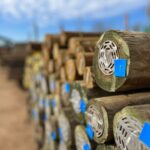
- Diameter is measured at the top (thin) end. A gum pole is a tree trunk, so it tapers. The butt end that goes into the ground is always a bit thicker than the size on the label, which is exactly where you want the extra strength.
- It is a band, not an exact number. No two poles are perfectly round or identical, so they are sorted into ranges. A 125–150 mm pole might measure 128 mm or 147 mm at the top, and both are correct.
Structural poles in South Africa are made to SANS 457-3, the national standard for hardwood (eucalyptus) poles. It sets the visual quality rules and groups poles by top diameter: a team from Stellenbosch University, for example, tested building poles sorted into 125–149 mm, 150–174 mm and 175–199 mm classes under this standard (read the study). Poles that are only treated to SANS 1288 meet the treatment requirements but not the strength and visual rules of SANS 457, as FSC Africa explains. For building work, ask for SANS 457 poles.
Did you know?
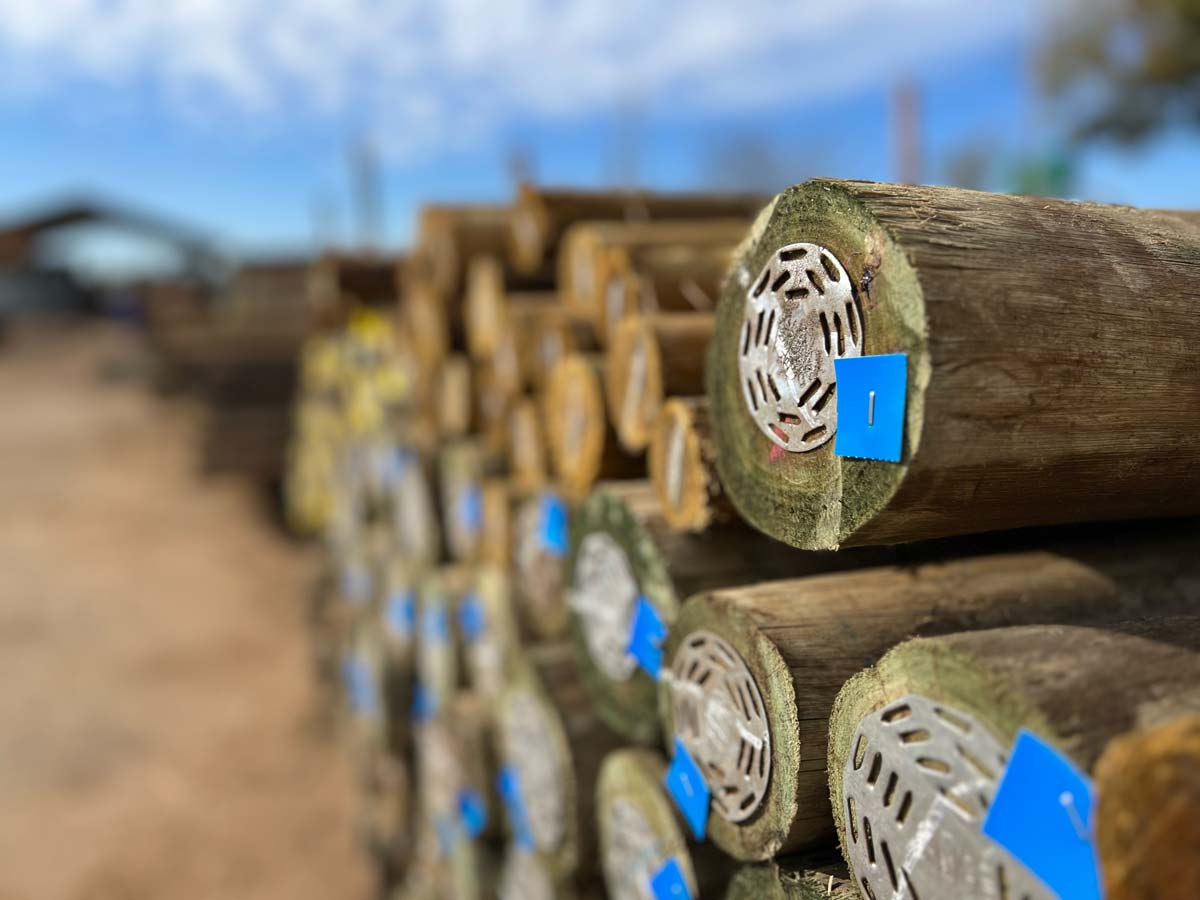
The standard, the SAWPA mark and the hazard class are marked on the end of every treated pole, so you can check what you are buying before it leaves the yard. Our guide shows how to read the SAWPA mark and SABS approval.
Want to go deeper into how poles are sorted and marked? Our guide to eucalyptus timber grades and classifications covers grading, defects and markings in detail.
Gum pole size chart: which size for which job
Use this chart as a starting point. It covers the projects we are asked about most. For anything that carries a roof, people or heavy livestock, your engineer or builder has the final say.
| Project | Length | Top diameter | Hazard class |
|---|---|---|---|
| Garden edging, raised beds, play-area borders | 1.2–2.4 m | 50–100 mm | H4 |
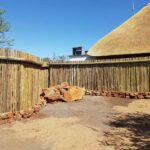
| Garden and boundary fence posts | 1.8–2.4 m | 75–100 mm | H4 |
| Farm fence line posts | 2.4–2.7 m | 75–125 mm | H4 |
| Straining, corner and gate posts | 2.4–3.0 m | 125–175 mm | H4 (H5 in wet soil) |
| Cattle kraal and crush posts | 2.4–3.0 m | 150–200 mm | H4 or H5 |
| Pergola uprights | 3.0–3.6 m | 100–150 mm | H4 |
| Pergola beams and cross-pieces | 3.0–4.8 m | 75–125 mm | H3 |
| Carport and shade-port uprights | 3.0–3.6 m | 125–175 mm | H4 |
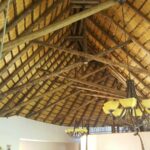
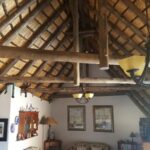
| Lapa and thatch-roof columns | 3.6–6.0 m | 175 mm and up | H4 (planted) |
| Thatch-roof rafters | 4.5–8.0 m | 100 mm and up | H3 |
| Thatching laths | 3.0–4.5 m | 25 mm and up | H3 |
Diameters are top (thin-end) measurements. Roof figures follow the minimums in the Thatchers Association guide; other rows are typical practice, not a standard.
Need the slimmer stuff? See our treated droppers in five lengths from 1.2 m to 2.4 m, CCA treated thatching laths in 3 m, 3.6 m and 4.5 m, and treated garden edging. Full-size CCA treated gum poles are cut and treated in any length from 1.2 m to 14 m.
Diameter bands decoded
Diameter bands sound technical, but each one has a personality. Here is what each band is usually asked to do:
Garden stakes, edging, trellis frames and light screens.
Garden fences, farm line posts and pergola cross-pieces.
Heavier fence posts, small pergola uprights and roof rafters.
Corner and straining posts, gate posts and carport uprights.
Kraal and crush posts, ring beams and larger carports.
Lapa and thatch columns and structures that carry real loads.
Why one size up makes such a difference
A 150 mm pole has 2.25 times the cross-section of a 100 mm pole, but it is roughly five times stiffer in bending. Stiffness grows with the diameter to the power of four, so a small step up in size buys a lot of strength.
Choosing the length (and the bit underground)
The length you order is the height you want above the ground, plus the depth that goes into the hole, plus a little extra if you plan to trim the top or notch it for a beam.
For the depth, a long-standing rule of thumb from the pole-line world is 10% of the pole length plus 600 mm. It is a sensible starting point for fence posts and light structures. Soft or sandy soil, strong wind or heavy loads can push it deeper, and structural poles should always be set to your engineer’s design.
Worked example: you want 2.4 m of clear height under a carport beam. A 3.6 m pole goes in about 0.96 m (10% of 3.6 m is 0.36 m, plus 0.6 m) and leaves about 2.64 m above ground, with room to seat the beam. Building poles are often specified in 0.6 m steps above 3 m (3.6, 4.2, 4.8, 5.4 m and so on), but we cut to whatever your plan needs.
📏 Pole length calculator
Enter the height you want above ground. We will add the depth using the 10% + 600 mm rule of thumb.
A starting point for fences and light structures, not an engineering calculation. Round up and tell us the exact length: we cut every pole to length before it is treated.
Pro tip: collar, not cup
Setting a pole in concrete? Pour a collar around the pole instead of a closed cup under it, so water can drain away from the butt. The Thatchers Association guide recommends exactly that for planted roof columns, and it is good practice for every post.
Not sure? Try the 10-second size finder
Pick your project and we will show you a sensible starting size:
Garden fence
Posts: 75–100 mm × 1.8–2.4 m, H4. Corners and gates: one band thicker. Fill the gaps with treated droppers or rails.
Farm fence
Line posts: 75–125 mm × 2.4–2.7 m, H4. Straining and corner posts: 125–175 mm × 2.4–3.0 m. More in our guide to treated poles on the farm.
Kraal or crush
Posts: 150–200 mm × 2.4–3.0 m, H4, or H5 where the ground stays wet and muddy. See our cattle kraal designs for layouts.
Pergola
Uprights: 100–150 mm × 3.0–3.6 m, H4. Beams and cross-pieces: 75–125 mm, H3. Follow our step-by-step gum pole pergola guide.
Carport or shade port
Uprights: 125–175 mm × 3.0–3.6 m, H4. Beams and rafters: 100–150 mm, H3, sized to the span and roof sheeting. Ask your builder to confirm spans.
Lapa or thatch roof
Columns: 175 mm and up. Rafters: 100 mm and up at the thin end. Ring beam: 150 mm and up. Our guide to roofing poles, spacing and treatment covers the full roof.
Size is half the story: pick the right hazard class
A thick pole that rots is still a rotten pole. Untreated gum is not durable in the ground: Queensland’s timber data rates Eucalyptus grandis at in-ground durability class 3 and lists it as not termite resistant (see the rose gum profile). Pressure treatment is what turns a gum pole into one that lasts for decades.
In South Africa, treated timber is sold by hazard class (H-class). SAWPA’s hazard class guide sets out each class; for poles, three matter most:
- H3, outdoors above ground: pergola beams, rafters, rails and cross-pieces.
- H4, in contact with the soil: fence posts, pergola and carport uprights and planted columns.
- H5, in wet ground or fresh water: foundation poles, retaining walls, feedlots and poles in waterlogged soil.
Most of our poles are CCA treated: clean, odourless and paintable. Creosote leaves a dark, oily finish that suits heavy-duty farm work. Compare the two in CCA vs creosote treated timber, learn when to use CCA treated timber, or find out how long creosote poles last.
How gum pole prices work
“What does a gum pole cost?” is one of the questions we hear most, and the honest answer is: it depends on the size. Size changes the price far more than most people expect. These are the things that move the number:
- Diameter: the biggest driver. One band thicker means a lot more wood and more preservative.
- Length: longer poles cost more, and very long poles (8 m and up) come from bigger, scarcer trees.
- Hazard class: H5 poles carry more preservative than H4, and H4 more than H3.
- Treatment type: CCA or creosote.
- Quantity and mix: a full load is priced differently from a handful of poles.
- Delivery: collect from our yard in Commondale, Mpumalanga, or ask about delivery to your site.
The fastest way to an accurate price is a list: lengths, diameters (if you know them), quantities, what the poles are for and your delivery town. Send it through our quote form and we will come back with a firm price and lead time.
Three warning signs on cheap poles
No SAWPA mark on the end, no hazard class marked, or raw wood showing where a pole was cut after treatment. Any one of these can mean a pole that will not last.
Before you order: the 6-point checklist
Have these answers ready and your quote takes minutes, not days:
- What is the pole for, and will it carry a roof, people or livestock?
- How high must it stand above ground? Add the depth in the hole.
- Which diameter band do you need, measured at the top?
- Where will it stand: above ground, in soil or in wet ground (H3, H4 or H5)?
- How many poles, droppers and laths do you need in total?
- Will you collect, or where should we deliver?
Need odd lengths or a special treatment? We offer timber sizing and cutting before treatment, so every pole arrives at the size you ordered.
Got your list? We will size it for you.
Send us your project, lengths and quantities. We will confirm the right diameters and hazard class and send a firm quote.
Gum pole size FAQs
What sizes do gum poles come in?
Gum poles are sold by length and top diameter. Lengths run from about 1.2 m to 14 m, and top diameters are sorted into bands from around 50 mm to 200 mm and more. Commondale Poles cuts and treats poles from 1.2 m to 14 m in a range of diameters.
What size gum pole do I need for a fence?
For a garden fence, use 75–100 mm posts that are 1.8–2.4 m long. Farm line posts are usually 75–125 mm × 2.4–2.7 m, and corner, straining and gate posts one or two bands thicker (125–175 mm). Fence posts go in the ground, so they need H4 treatment.
What size poles should I use for a pergola?
Pergola uprights are usually 100–150 mm × 3.0–3.6 m and treated to H4, because they stand in the ground. Beams and cross-pieces of 75–125 mm treated to H3 are typical, depending on the span.
What size poles do I need for a lapa or thatch roof?
The Thatchers Association of South Africa guide calls for upright columns of at least 175 mm top diameter, rafters of at least 100 mm at the thin end and a ring beam of at least 150 mm. A competent person must design and certify a thatch roof under SANS 10407.
Is gum pole diameter measured at the top or the bottom?
At the top, the thin end. Gum poles taper, so the butt end that goes into the ground is always thicker than the size on the quote.
How deep should a gum pole go into the ground?
A common rule of thumb is 10% of the pole length plus 600 mm, so a 3.6 m pole goes in about 0.96 m. Soft soil, wind and heavy loads may need deeper holes, and structural poles should follow your engineer’s design.
How much does a gum pole cost?
The price depends mainly on diameter and length, then on the hazard class, the treatment (CCA or creosote), the quantity and delivery. Send Commondale Poles your list of sizes and quantities for a firm quote.
Measure twice, order once, and your poles will stand strong for decades. If you are still unsure about a size, ask us: choosing poles is what we do every day.